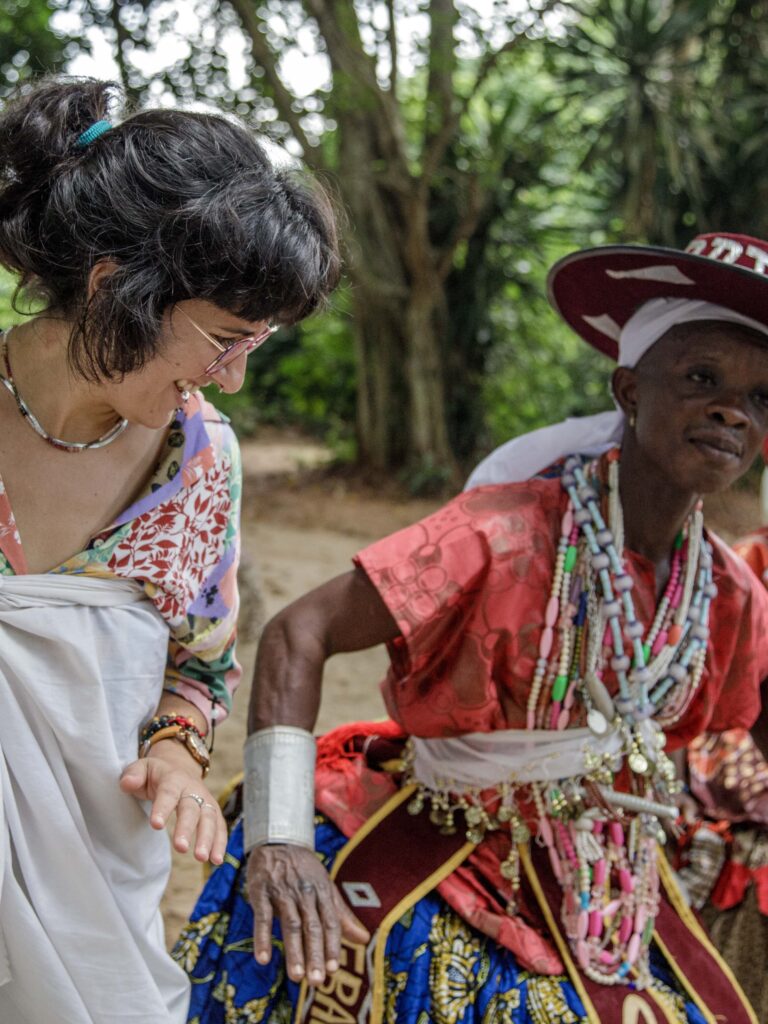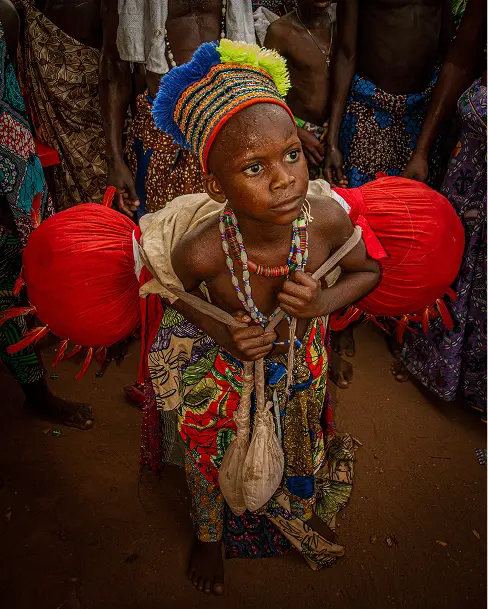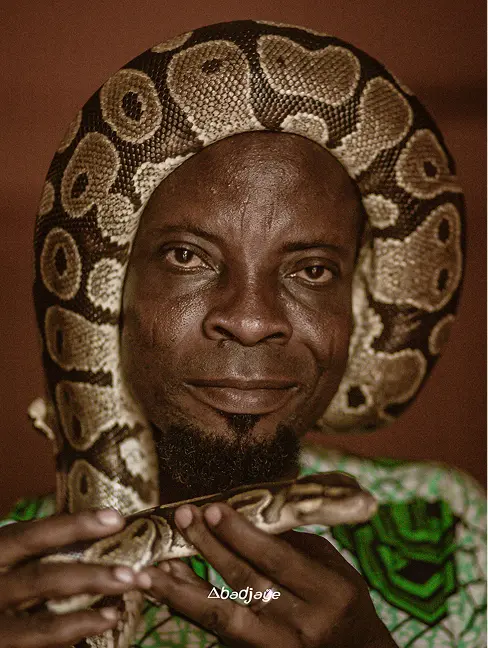

On the border between southwestern Benin and Togo, this expedition explores the territories of Adja-Tado, the historical cradle of several major kingdoms in the region. Through royal traditions, living spiritualities, oral histories, and migration narratives, this journey invites you to discover the cultural ties that still bind the peoples of Benin and Togo today.
Structured around the major events of the traditional calendar, the tour allows you to attend the Épé-Ékpé festival in Aného-Glidji, the New Year celebration of the Guin people, as well as other ceremonies depending on the travel dates: Vodun rites in Dassa-Zoumè, royal traditions in Porto-Novo, or the Gaani of Nikki, a prestigious royal and equestrian festival bringing together Bariba and Fulani horsemen. These events offer an exceptional immersion into the heart of the region’s spiritual and cultural heritage.
Designed for photographers, videographers, researchers, and documentary filmmakers, this expedition prioritizes a respectful approach to communities and traditions. Between historic villages, the landscapes of Mono, sacred sites, and major popular celebrations, it offers a rare immersion into the cultural roots of the Adja-Tado region and the legacies that continue to shape contemporary West Africa.
Expedition program
Monday, August 24, 2026 – Arrival in Cotonou, airport welcome. Brief introduction to Beninese culture and logistical briefing. Overnight stay in a simple hotel in Cotonou.
We will embark on a dugout canoe to reach Ganvié, the legendary lakeside city inhabited by the Tofin people since the 18th century. We will discover this large city with its houses on stilts, its floating markets, and scenes of daily life on the water.
Bopa is a region renowned for its preserved Vodun practices. Hêbiosso Sogbo is a deity of thunder and lightning, brothers in the Fon tradition, often celebrated together, master of storms and beneficial rain. Visit the Hêbiosso-Sogbo convent. Meet the Hounon (high priest) and the Vodunsi (initiates) and learn about the role of these deities in community and agricultural life.
Participation in the Hêbiosso Sogbo ceremony, procession of initiates.
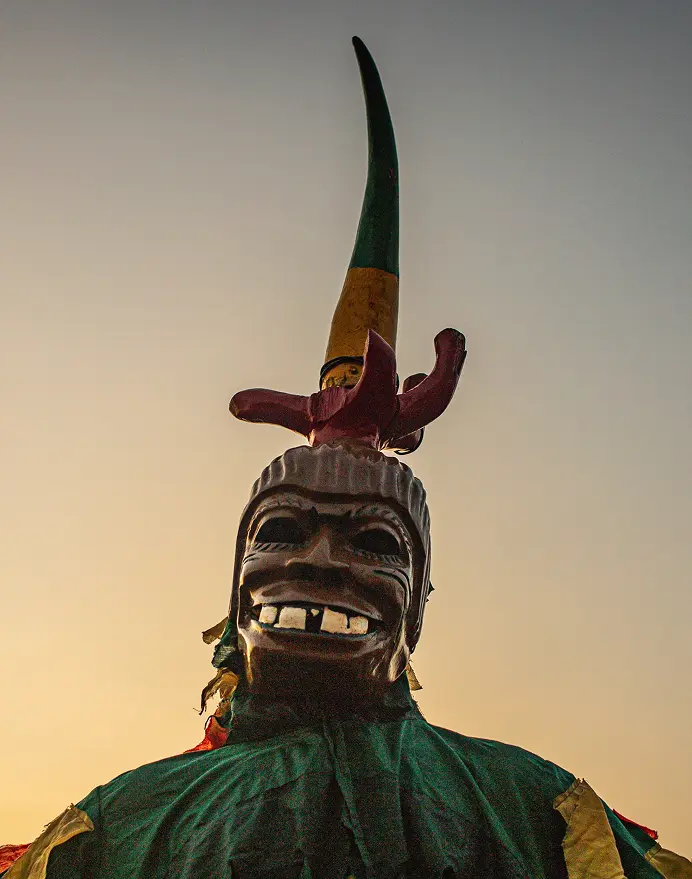
We are witnessing the Zangbeto processions. These performances fuse tradition, spirituality, and art.
The Zangbéto (or “night hunter” in the Goun language, from zan meaning night and gbéto meaning hunter) is a major cultural, spiritual, and security institution in southern Benin. Integrated into the Vodun pantheon, he acts as the traditional police and guardian of the community.
The Zangbeto originates from the kingdom of Hogbonou (present-day Porto-Novo). According to tradition, Prince Tê-Agbanlin used this tactic to frighten and rout the troops of his rival brother. His men hid under conical huts covered with banana leaves, blowing into ox horns to imitate supernatural forces. However, some ethnic groups in the Mono region, such as in the village of Guézin, have venerated the Zangbeto for centuries, a practice that continues to this day.
Departure from Grand-Popo to Ouidah. Travel along the Slave Route. After lunch, procession and ceremony of the Kokou followers in Meko. Departure for Porto-Novo, end of the day and overnight stay in the capital.
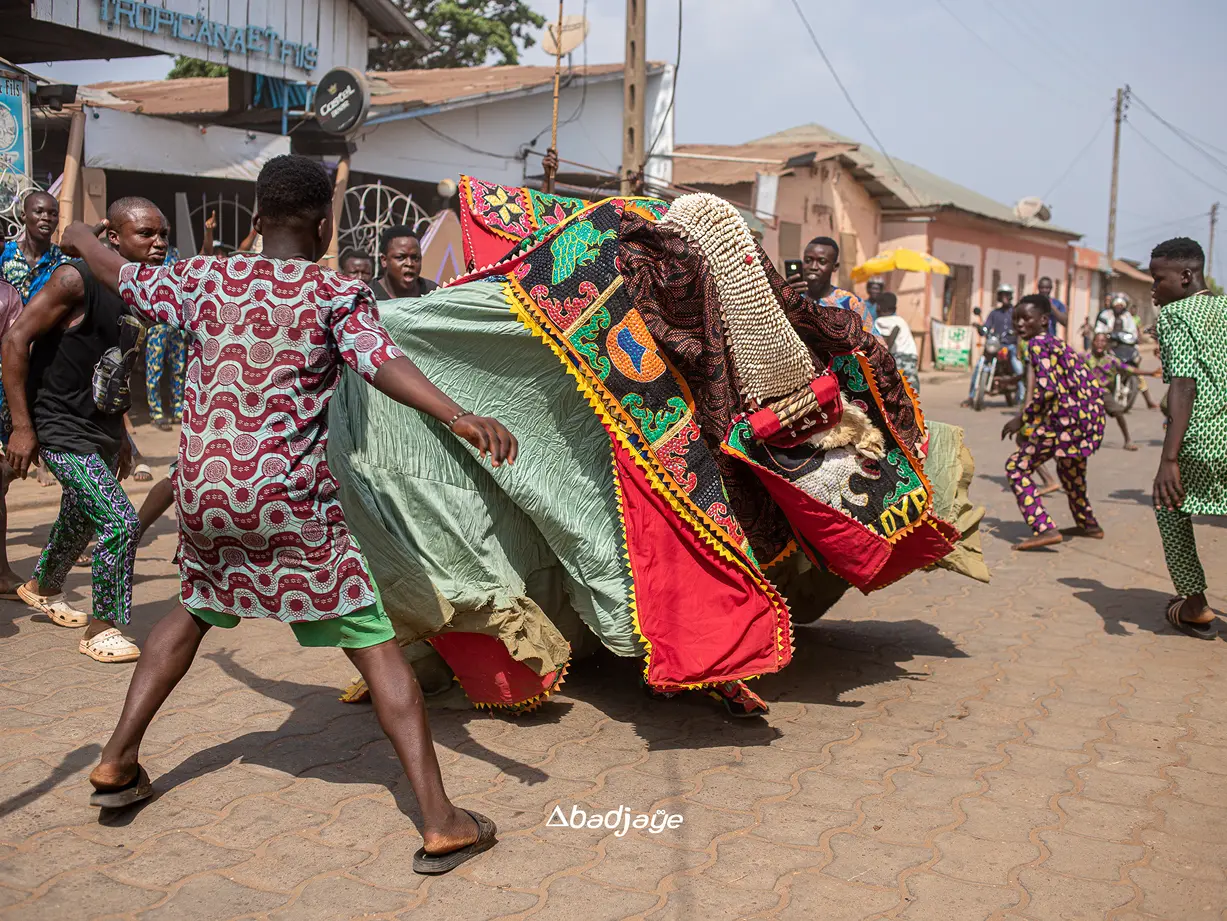
We will join Yoruba families to attend the Egungun ceremonies. These performances blend tradition, spirituality, and art: the deities wear colorful and intricately crafted costumes, embodying ancestral spirits. We will have a photo session capturing the costumes, movements, and community atmosphere.
In the afternoon, we will travel to Covè and be welcomed by a family who cherishes this heritage and preserves the Egungun tradition. We will learn about the symbolic presentation of the masks, the ritual hierarchy, and the social role of the ceremony.
The Agonlin region, with Covè at its heart, is world-renowned for preserving this intangible cultural heritage, inscribed on UNESCO’s list. Covè is one of the largest sanctuaries of the Guelèdè culture in Benin, a sacred tradition of the Yoruba-Nago community. This unique cultural expression blends dance, song, theater, and spirituality to honor the primordial mother (Iya Nla) and celebrate the power of women.
Departure for Abomey, the royal city and historical capital of the Kingdom of Dahomey. We will stroll through its history-laden streets before visiting the royal palaces and museums, a UNESCO World Heritage Site. Immerse yourself in the fascinating history of this legendary kingdom of the Amazons and their dances.
Participation in a traditional Atiganli ceremony, an emblematic Vodun cult of the Dassa region. To the rhythm of drums, sacred chants and ritual dances, this immersion allows you to discover ancestral practices, the blessings of the priests and the richness of Benin’s spiritual heritage.
Explore the central market and the palace on Gnonhossou Square, then visit a voodoo convent. Overnight in Parakou.
Early departure for Nikki (90 km). Visit to the Bariba royal palace, preparation of the horses. Evening of the Gaani festival, ceremony of the horsemen and the Fulani. Gaani is the largest traditional, cultural, and identity-defining festival of the Baatonu (Bariba) and Boo peoples. It is celebrated every year primarily in Nikki, the historical capital of the former Borgou empire located in northeastern Benin. Instituted in the 14th century by the sovereign Sunɔ Sero, the word “Gaani” means “joy, victory, or deliverance.”
Morning with the Fulani people of Nikki (breakfast at a local’s home), departure for Djougou (via Parakou). En route: meeting with herders. Overnight in Djougou.
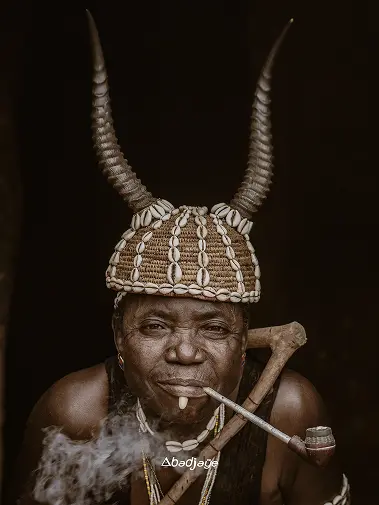
We will then continue our journey to the village of Badjoudé, famous for its Assassa Mask performances, one of the most impressive cultural heritage sites in northwestern Benin.
Visitors will enjoy a private performance of the Assassa masks, accompanied by traditional songs, drumming, and dances. Elders will explain the history of this initiation society, the symbolism of the costumes, and the role of the masks in protecting the village.
In the late afternoon, we will return to Djougou.
We will enter Taneka territory, a people originating from Togo who took refuge in these mountains to escape Islamic expansion and the slave trade.
The Taneka Mountains are among the most mysterious places in northern Benin.
We will meet animist priests, discover their sacred altars, and then hike to the blacksmiths’ village, perched atop the sacred mountain.
Visitors will then share a special moment with the elders to better understand their social organization, beliefs and ancestral rites.
This day will be dedicated to discovering the nomadic peoples of the north.
We will visit a traditional Fulani encampment, renowned for their magnificent facial tattoos, elaborate hairstyles, and pastoral culture.
We will meet with several families to discover their way of life, their herds, their traditions, and their livestock farming techniques.
We will then continue to the villages of the Gando people, located in the arid plains of northern Benin, where we will share their daily lives.
In the late afternoon, free time to visit the Natitingou Regional Market.
The Tamberma (called Somba in Benin) are a West African people living in the Atacora mountain range, straddling northwestern Benin and northeastern Togo. They are world-renowned for their unique traditional dwellings: the Tata Somba (or Takienta), earthen fortresses that resemble miniature castles.
Crossing the Benin–Togo border (Porga). Visit to the earthworks of the Koutammakou region (Lasso). Koutammakou is a region of Togo and Benin, in West Africa, home to the Batammariba, Tamberma, Somba and Tamba peoples.
We will attend a private presentation of the famous Evala wrestling, a traditional initiation rite that marks the passage of young men aged 18 to 20 into adulthood.
The official festivities take place every year for about ten days in July and constitute one of the biggest cultural events in Togo.
For Vodoun Travel travel groups, a private demonstration can be arranged outside the official period, featuring traditional wrestlers, cultural explanations, songs and ceremonies, allowing for an authentic immersion in this exceptional tradition.
Transfer to Notsé (a key Ewe village). Participation in a sacred Djokoto dance (Ewe Atsu) led by the guardians of the cult. The Djokoto dance is a major sacred and royal dance of the Ewe people in Togo. Its historical and mystical roots lie in the historic city of Notsé, considered the cultural cradle of the Ewe.
An early morning drive to the Aného lagoon and the village of Glidji, the heart of the Épé-Ékpé festival.
The Épé-Ékpé (or Ekpessosso) festival is the traditional celebration of the Guin people, held annually in August or September in Glidji Kpodji near Aného, in southeastern Togo. This three-hundred-year-old event marks the traditional New Year and was officially inscribed on UNESCO’s Representative List of the Intangible Cultural Heritage of Humanity in December 2025.
A full day at the Épé-Ékpé festival. Procession of the Kpessosso (sacred stone), dream rituals, songs and dances by priests and priestesses.
The Épé-Ékpé (or Ekpessosso) festival is the traditional festival of the Guin people, celebrated every year in August or September in Glidji Kpodji near Aného, in southeastern Togo. This three-hundred-year-old event marks the traditional New Year and was officially inscribed on UNESCO’s Representative List of the Intangible Cultural Heritage of Humanity in December 2025.
Day two at the Épé-Ékpé Festival. Procession of the Kpessosso (sacred stone), dream rituals, songs and dances by priests and priestesses.
The Épé-Ékpé (or Ekpessosso) Festival is the traditional festival of the Guin people, celebrated every year in August or September in Glidji Kpodji near Aného, in southeastern Togo. This three-hundred-year-old event marks the traditional New Year and was officially inscribed on UNESCO’s Representative List of the Intangible Cultural Heritage of Humanity in December 2025.
Day three of the Épé-Ékpé festival. Procession of the Kpessosso (sacred stone), dream rituals, songs and dances of the priests and priestesses.
The Épé-Ékpé (or Ekpessosso) festival is the traditional festival of the Guin people, celebrated every year in August or September in Glidji Kpodji near Aného, in southeastern Togo. This three-hundred-year-old event marks the traditional New Year and was officially inscribed on UNESCO’s Representative List of the Intangible Cultural Heritage of Humanity in December 2025.
Fourth day of festivities. Free morning to witness the final rites and ritual cleaning of sacred sites. Dance of the priestesses in white, recharging of local fetishes, final blessing with the Yêkê yêkê ceremony .
Visit to the Akodessawa market – End of the tour. Transfer to Lomé International Airport or return to Cotonou depending on your flight.
Circuit services
Included
- Driver + vehicle + fuel
- Bilingual photographer guide (dedicated English-French)
- Entrance fees to sites and ceremonies
- Accommodation
- Drinking water
- Meals (breakfast, lunch, dinner)
- Round-trip transfers
Not included
- Travel and medical insurance
- Personal expenses,
- Tips for the driver and guide,
- Alcoholic beverages
Request a quote
Thanks to its expertise in the field and in Beninese culture, Vodoun Travel designs immersive tours and tailor-made expeditions for photographers , videographers , researchers and content creators … Get a quote for one of our expeditions by filling out the form below so that our team can contact you.